I’d be sticking my head in the sand if I wasn’t concerned about AI coming for my job. As a solopreneur whose work is 100% carried out on a computer, I'm at high risk of losing my way of making a living to AI.
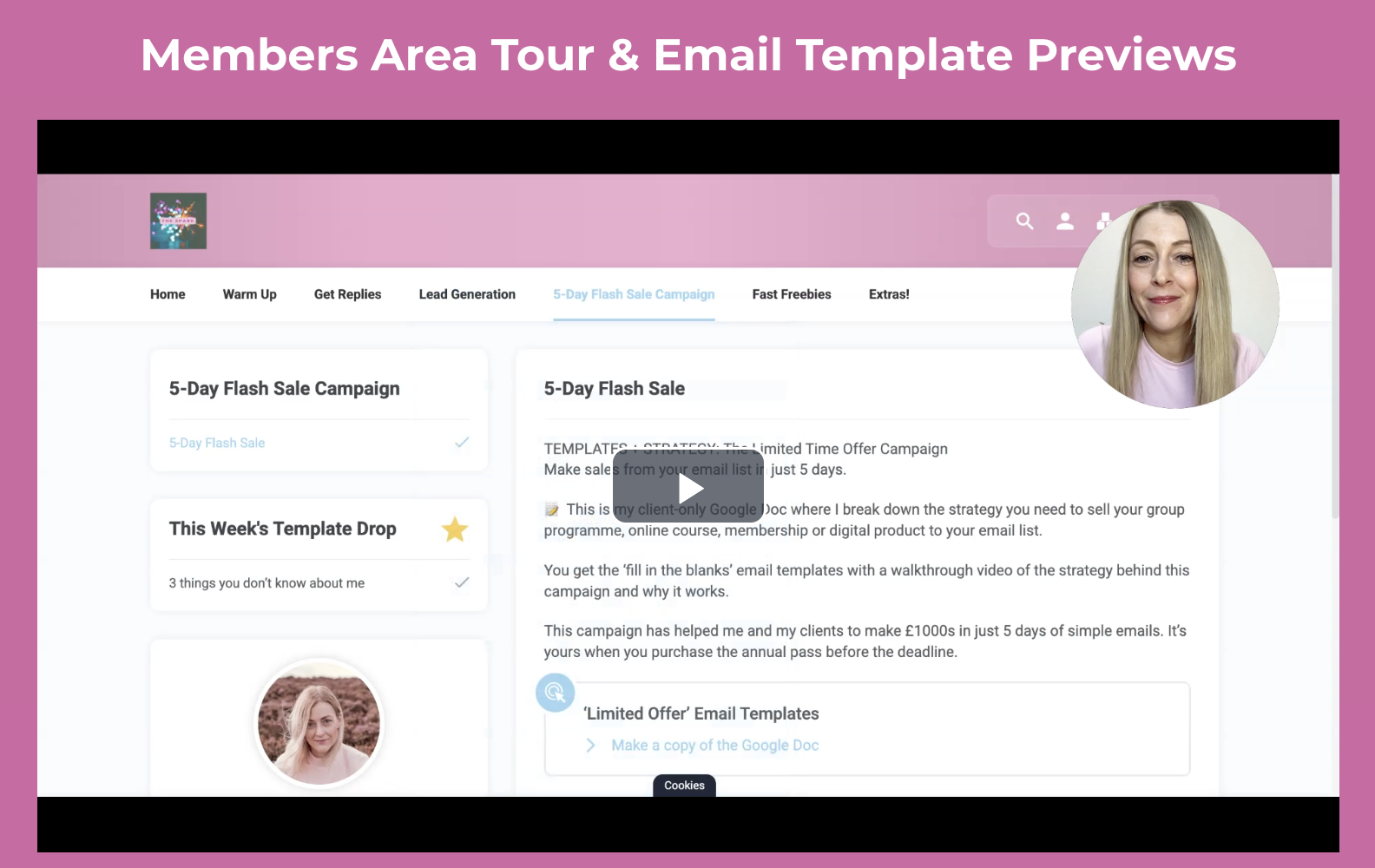
I’ve got to keep my eyes on how good AI is at email copywriting vs me and vs my clients when they write email copy with my direction or by using my email templates for solopreneurs inside my email marketing membership, The Spark.
I don’t use AI to come up with weekly newsletter ideas or write any of my copy for a multitude of reasons relating to protecting my own creativity and the planet, but I’d be naive to think that I’m in the majority when it comes to not using AI in my marketing.
I see enough AI-written content and emails to know that plenty of business owners like me are using AI copy. How can I tell it’s AI? Keep reading and I’ll show you.
The Struggle of Writing Email Newsletters from Scratch
But first, I understand why non-copywriters would use AI to create content and write email newsletters. Writing from scratch is a skill that not everyone has and in today’s world of chronic overwhelm, it can feel impossible to carve out the time to come up with an idea, write it, polish it and post it. I totally get it.
But in the interest of helping my clients do what’s best for their business, I’m looking closely at what AI is currently capable of producing vs us humans. I want to know if my clients still need my help to write copy, or if the robots have got it covered.
A quick Google search on the topic showed me a blog which was asking if we can still tell whose “holding the pen” when it comes to marketing copy.
The blog gave two examples of website headline copy for a B2B company. One written by AI, one by a human copywriter, and asked if we could tell the difference.
Immediately, I knew which sentence was AI and which was human. In my eyes, it wasn’t even a contest.
Real-World Example: AI Drivel vs. Human Connection
Here’s the copywriting:
Option A: "Transform your business processes today with our innovative cloud solutions and experience the difference immediately."
Option B: "Your competitor earned their first million yesterday. You're still struggling with Excel sheets from 2019."
Can you tell which one is AI?
I won’t make you scroll to the bottom of this to find out. Option A is AI and Option B is the human copywriter.
Option A is generic, vanilla, boring. We’ve read this kind of sentence a million times before. Read it again: what does it even mean??
Option B is clearly human because it contains an example of lived experience: “You're still struggling with Excel sheets from 2019."
Anyone who's battled with an ancient, clunky Excel spreadsheet knows this pain point and frustration.
Then there’s the transformation statement. AI says: "Transform your business processes today”. YAWN. How bland. Transform which processes into what? Despite being given “a clever 47-word prompt” according to the article, this is the drivel it churns out.
The human transformation statement is really clever. By stating: "Your competitor earned their first million yesterday” we know that the desired outcome for this company’s ideal client is to make their first million in business.
Why Lived Experience is Your Best Sales Tool
This is why I’m firmly in the camp that humans are still much better copywriters than AI. You can prompt all you like, but without lived experience, AI cannot weave in the subtleties that speak to the hearts and minds of your ideal clients.
Back to the part about copywriting being difficult if you are not a natural writer. This is still true but there’s a new benefit to you if your copy isn’t perfect and polished: Your audience can tell that you wrote it!
AI copy is so sterile and perfectly grammatically correct that as soon as we read an imperfect piece of writing, we can tell it was written by a human. This is a huge plus point because your social media followers and email subscribers don’t want to read copy written by AI. They want to read stuff written by YOU.
For now, my professional advice to you from me as a copywriter and marketer since 2008, is to write your own copy. AI will make you think it’s a better writer than you because technically, it often is a better writer!
But your audience doesn't want to read perfect prose that wasn’t written by you. They want YOUR opinion, feelings and lived experience of the work that you do to show them how they can improve their lives and businesses.
How to Write High-Converting Emails Without Using AI
The good news is that avoiding AI for your writing doesn’t mean you have to start with a blank page. I know that coming up with ideas for content and weekly email newsletters is a treadmill that you don’t want to be on. This is why I create new, weekly email templates for my clients inside my membership, The Spark.
My email ideas are 100% human-generated and are based on real life emails I have sent to my own list. You don’t need to rely on AI to think for you because you have something better - a human doing the creative thinking!
I do for you what AI can’t: show you how to add lived experience to your email content so that when your ideal client reads it, it feels like you know them and you get how they are feeling.
With my email templates, no one will ever accuse you of using AI, because your emails won’t feel robotic.
Differentiate Your Business from the AI Noise
Right now is the perfect time to differentiate yourself from your competitors who are using AI by adopting a human-led marketing strategy. By writing in your own imperfect voice with strategic direction from me (your experienced human), you can attract and convert more ideal clients than the person over there churning out a higher volume of drivel.
If you want to see how my human-written email templates will help you to connect with your subscribers more deeply than emails written by AI, take a look at my email marketing membership, The Spark. Watch the video on the sales page to see an example of the fill-in-the-blank email templates.